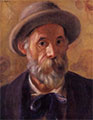
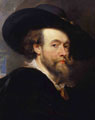
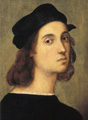



I found this painting on Toperfect and thought that you might be interested.
You can find it at: https://www.toperfect.com/hans-holbein-the-younger-Paintings/
Hans Holbein the Younger (1497/98–1543) was a German Renaissance painter and one of the greatest portraitists of the 16th century. Born in Augsburg, he became famous for his remarkably lifelike portraits, precise drawing and sophisticated understanding of human character. Working in Basel and later at the English court of King Henry VIII, Holbein portrayed monarchs, nobles, merchants and leading intellectuals of the Renaissance. His art belongs to the Northern Renaissance and reflects the intellectual spirit of humanism, as well as the religious and cultural changes brought about by the Protestant Reformation. Beyond portraiture, Holbein created religious paintings, altarpieces, woodcut designs, book illustrations, jewellery designs and other works of exceptional technical refinement.
Hans Holbein the Younger Auction Records
Paintings by Hans Holbein the Younger are exceptionally rare on the international art market. Many of his most important portraits and religious compositions are preserved in major museums, including the National Gallery in London, the Kunstmuseum Basel and the Frick Collection in New York. Consequently, auction results involving his name require careful attention to attribution, particularly when a catalogue identifies a painting as a collaboration with his workshop.
An important auction result was achieved by Portrait of Desiderius Erasmus (1466–1536), Half-Length, attributed to Hans Holbein the Younger and Workshop. The painting was sold at Christie's London on December 8, 2022, for £1,122,000, including buyer's premium. Christie's described the result as a world auction record for the artist at that time. However, because the catalogue explicitly included the workshop, this should not be presented as an unquestioned record for a painting entirely by Holbein's own hand.
Holbein's works on paper and prints also attract interest from collectors. His portrait drawings, book illustrations and preparatory studies demonstrate the extraordinary precision of his draughtsmanship. When comparing auction prices, it is important to distinguish original paintings, drawings, prints and workshop works, since they represent different categories of artistic production and market value.
Biography of Hans Holbein the Younger
Hans Holbein the Younger was born in Augsburg, southern Germany, around the winter of 1497–98. His father, Hans Holbein the Elder, was an established painter, and both Hans and his older brother Ambrosius received their early artistic training in the family workshop. Around 1515, the brothers moved to Basel, an important centre of printing, publishing and humanist scholarship.
Holbein quickly established himself as a talented painter and book illustrator. In Basel, he became associated with the city's intellectual community, including the celebrated scholar Erasmus of Rotterdam. His portraits of Erasmus demonstrate his ability to combine accurate physical likeness with subtle expressions of personality and learning. In 1519, Holbein joined the Basel painters' guild, marking an important step in his professional career.
In 1526, Holbein travelled to England with a letter of introduction from Erasmus to Thomas More, then an influential statesman and scholar. During this first English visit, he painted portraits of More and members of his circle. He returned to Basel in 1528, but the religious changes associated with the Reformation reduced opportunities for traditional religious commissions. In 1532, he returned to England, where he established a successful career among wealthy merchants and members of the royal court.
By 1536, Holbein had become court painter to King Henry VIII. He produced portraits of the king, members of the royal family, courtiers and important diplomatic visitors. His work became an essential visual record of Tudor England. Holbein died in London in 1543, leaving behind an artistic legacy that connected German Renaissance traditions with the cultural life of England and continental Europe.
Famous Paintings by Hans Holbein the Younger
The Ambassadors (1533) is one of Holbein's most celebrated paintings. The double portrait depicts two French diplomats, Jean de Dinteville and Georges de Selve, standing beside a table filled with scientific, mathematical and musical instruments. The distorted skull in the foreground is a famous example of anamorphic perspective, transforming the composition into a meditation on knowledge, mortality and the limits of human achievement. The painting is now held by the National Gallery in London.
Another iconic work is Henry VIII, the famous portrait of the English king that helped establish the visual image of Tudor royal power. Holbein's detailed treatment of the king's clothing, jewellery and imposing posture communicates authority and status. His portraits of Thomas More, Erasmus of Rotterdam and Jane Seymour are equally important examples of his ability to portray individuals with extraordinary clarity and psychological depth.
Among his religious masterpieces, The Darmstadt Madonna, also known as the Madonna of Mayor Jakob Meyer zum Hasen, is particularly significant. Painted in the 1520s, it depicts the Virgin Mary surrounded by members of the Meyer family. Another remarkable work is The Body of the Dead Christ in the Tomb, a powerful and unusually realistic representation of Christ's body after the Crucifixion. These works reveal a different side of Holbein's artistic vision, combining religious devotion with intense observation of the human form.
Artistic Style and the Northern Renaissance
Holbein's art is distinguished by precision, balance and an extraordinary attention to detail. His portraits capture the texture of fabrics, the brilliance of jewellery, the subtle features of faces and the individual character of his sitters. Rather than relying on exaggerated expressions or dramatic gestures, he created convincing images through careful observation, controlled composition and sophisticated use of light.
His style combined the detailed realism associated with Northern European painting with Renaissance principles of proportion, perspective and classical design. The influence of Italian and Netherlandish art can be seen in his compositions, while his own artistic identity remained rooted in the German and Swiss traditions in which he was trained.
Holbein's relationship with humanism was especially important. Through his portraits of Erasmus, Thomas More and other scholars, he recorded the intellectual culture of his time. Books, inscriptions, scientific instruments and personal emblems in these paintings often reveal information about the sitter's education, beliefs and achievements. His works therefore function not only as portraits but also as historical documents of Renaissance society.
Hans Holbein the Younger and the Protestant Reformation
The Reformation profoundly changed the artistic environment in which Holbein worked. In Basel, religious reforms and iconoclastic movements challenged the traditional role of religious imagery, and some paintings and decorations were destroyed or damaged during disturbances in 1529. Holbein responded to changing circumstances by developing new opportunities in portraiture, book illustration and decorative design.
His artistic identity cannot be reduced to a single religious position or style. He worked in a period of intense theological debate and created both religious compositions and portraits of leading humanist thinkers. His ability to adapt to different patrons and cultural environments helped him become one of the most internationally influential painters of the Northern Renaissance.
The Amerbach Cabinet and Kunstmuseum Basel
The Amerbach Cabinet played a major role in preserving Holbein's artistic legacy. Assembled by the Basel scholar and collector Basilius Amerbach during the 16th century, the collection included paintings, drawings, prints, books and other objects. At the time of Amerbach's death in 1591, it contained around fifty paintings, including fifteen attributed to Holbein the Younger.
In 1661, the city of Basel acquired the Amerbach Cabinet, preventing the collection from being dispersed and establishing the historical foundation of its public art collection. Further acquisitions, including works from the Museum Faesch in 1823, enlarged the holdings. Today, the Kunstmuseum Basel preserves one of the world's most important collections of Holbein's paintings, drawings and prints. This collection offers an exceptional opportunity to study his development as a painter and draughtsman.
Hans Holbein the Younger Art for Elegant Interiors
Holbein's portraits are particularly suitable for interiors that appreciate historical character, classical elegance and refined craftsmanship. His depictions of Renaissance scholars, noblemen and women can complement traditional living rooms, libraries, studies and formal reception spaces. Their balanced compositions and restrained colours work especially well with dark wood furniture, antique-inspired decoration and understated wall colours.
For a more distinctive display, The Ambassadors offers an intellectually engaging composition filled with historical objects and symbolic details. Religious works such as The Darmstadt Madonna can bring a contemplative atmosphere to a room, while portraits of Erasmus or Thomas More are excellent choices for a study or personal library. When selecting artwork, consider the original composition, dominant colours and the available wall space.
Hand-Painted Hans Holbein the Younger Reproductions by TOPERFECT ART
TOPERFECT ART offers carefully hand-painted reproductions of selected masterpieces from the Northern Renaissance and other important periods in European art. Our team includes academically trained artists and art-college teachers who pay close attention to the qualities that distinguish Holbein's paintings: accurate portrait proportions, subtle facial expressions, precise drawing, realistic fabrics and carefully balanced compositions.
Each reproduction is painted by hand rather than produced as a printed image. Our artists aim to follow the selected original artwork's composition, proportions, colours and visible details as faithfully as possible. Customers can choose a suitable canvas size for their interior and enjoy the distinctive character of Holbein's Renaissance portraiture and historical paintings at home.
80 Hans Holbein the Younger Paintings for Sale. Satisfaction Guaranteed 100%!